
Benefits of using a BPAro ABPM
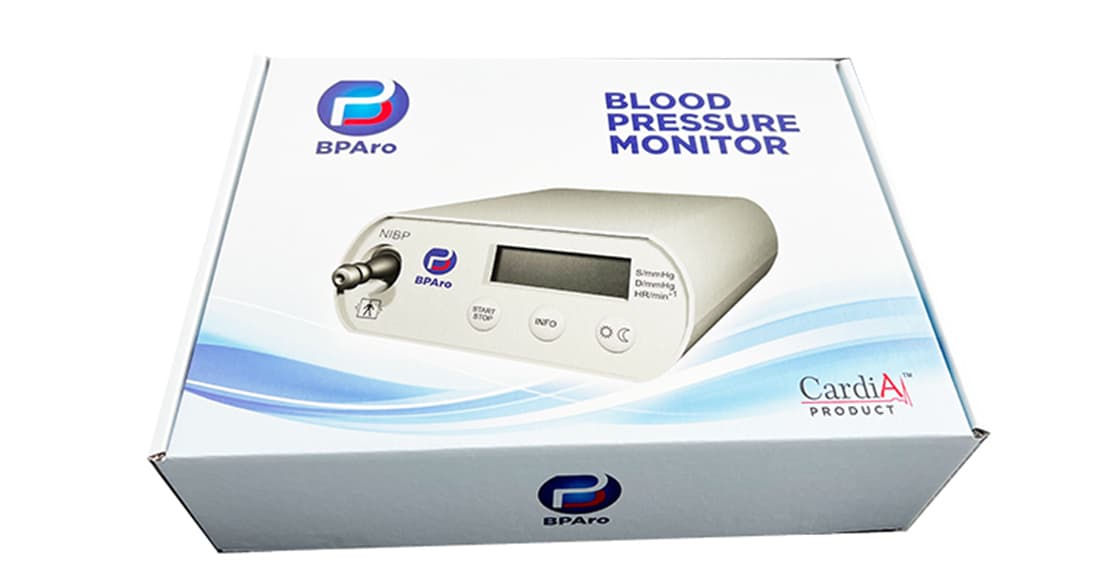
Few phrases show up as often in everyday health conversations as "blood pressure" — it's usually the first thing people bring up when something feels off. That familiarity is well earned: blood pressure is the force that moves blood through the circulatory system, carrying oxygen and nutrients to every tissue and organ in the body.
It also plays a supporting role in transporting hormones like insulin, along with the white blood cells and antibodies that keep the immune system running. Even a small, sustained deviation from a healthy range can put a person's overall wellbeing at risk.
Blood pressure naturally shifts throughout the day depending on activity, but readings that stay persistently high or low can lead to serious outcomes, including heart attack or stroke. That's exactly why accurate, regular monitoring matters so much.
How BPAro approaches ambulatory monitoring
Blood pressure is traditionally measured with a sphygmomanometer — an inflatable armband, paired with an electronic or analog dial, that briefly stops the pulse to take a reading. A single reading taken in a clinic, though, often isn't enough to confirm whether someone has hypertension or hypotension. That's usually the point where a doctor recommends ambulatory blood pressure monitoring (ABPM) — tracking blood pressure continuously rather than at one moment in time.
Classic ABPM equipment tends to be bulky and awkward to wear for an extended stretch. BPAro was built to solve that problem: a small, portable monitor that tracks blood pressure continuously for up to 30 hours, including through sleep, without disrupting a patient's normal routine.
It's straightforward to use, with clear instructions for patients and clinicians alike, and the measurement frequency can be programmed to fit each person's needs. Results sync automatically to a personal cloud account and the BPAro app, so nothing needs to be manually logged.
More data points toward a more precise diagnosis
Because BPAro captures a large volume of readings without any manual effort from the patient or clinician, it fills the gap left by a single office measurement. The resulting profile reflects blood pressure in a patient's everyday environment, free from the stress that a clinical setting can introduce.
What it offers clinicians
BPAro isn't just a tool for patients monitoring themselves at home — it gives clinicians faster, more precise data to work with. That makes it easier to fine-tune medication and assess cardiovascular risk with more confidence.
Because the device measures continuously without needing a patient or practitioner present, reports become available to both doctor and patient as soon as the data syncs to the app. Beyond detecting high or low blood pressure, clinicians can also use it to monitor patients already on medication or making lifestyle changes.
The BPAro app ties it together
The app is designed to be simple: downloading and sharing reports takes just a few taps, and one account can sync across multiple clinics, patients and staff members. It's available on both Android and Apple devices, offers clinical interpretation based on set guidelines, and keeps devices trackable and paired to individual patients — so records can be compared over time. HL7 connectivity for electronic medical records is supported, with external API access available on request.
A few more details
BPAro ships with cuffs in multiple sizes, includes a simple diabetic-mode button for patients with an existing diagnosis, and can record and categorize ambulatory non-invasive blood pressure measurements (NIBP) across up to 350 groups.
Clinically validated and approved by both the FDA and Health Canada, BPAro has become a standard fixture in hospitals, clinics and medical facilities — making continuous blood pressure monitoring more accurate and more accessible than it's ever been.