
Ambulatory blood pressure monitoring for hyper and hypotension
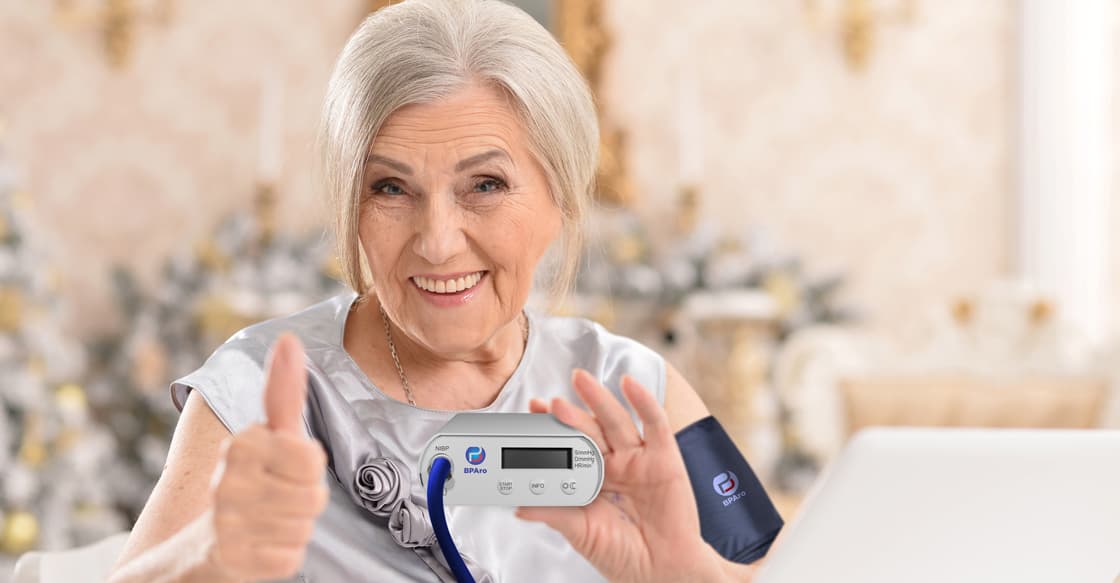
Hypertension is one of the world's leading causes of death, most often showing up as cardiovascular disease. It's traditionally diagnosed from the blood pressure reading taken during a doctor's office visit — but that single reading rarely reflects what a patient's blood pressure actually looks like throughout the day.
Two common distortions explain the gap. The first is the well-known "white coat effect," where nervousness in a clinical setting temporarily raises blood pressure. The second runs the opposite way: masked hypertension, where readings look normal in the office but are elevated the rest of the time.
To avoid both kinds of error, doctors often turn to ambulatory blood pressure monitoring — tracking blood pressure around the clock, through sleep and through a patient's normal routine, rather than relying on a single snapshot. A full 24-hour ABPM reading is a far more dependable way to diagnose hypertension, and a better predictor of both hyper- and hypotension than any single office visit.
The BPAro ABPM device
BPAro monitors blood pressure continuously for up to 30 hours. It's built for healthcare professionals to use with minimal friction — recording each patient's readings and saving them straight to that patient's cloud account.
Doctors can pull up patient records from anywhere through the BPAro iOS and Android apps. Data is captured in a format trained professionals can interpret easily, and it's stored to HL7 standards, which makes integrating with electronic medical records straightforward.
How it works day to day
The device is small enough to wear on a belt, connected to a cuff on the upper arm. It takes a reading every 30 minutes, and each one saves automatically to the patient's account in the cloud. Where an office visit only captures a single moment, BPAro builds a running picture of blood pressure across an entire normal day.
Catching nocturnal hypertension
Under the 2017 American Heart Association guideline, nocturnal hypertension is defined as an ABPM reading above 110/65 mmHg overnight. It shows up more often in Asian populations specifically, and can stem from sleep disturbances, autonomic dysfunction, or other lifestyle factors — none of which a daytime office reading would ever catch.
Because BPAro keeps recording every 30 minutes through the night, it gives doctors a way to rule white coat or masked hypertension in or out with real overnight data, not a guess.
For patients at risk of sleep apnea
Obstructive sleep apnea (OSA) is common — and commonly underdiagnosed — among people with hypertension. For patients reporting heavy snoring, especially those with untreated high blood pressure, continuous overnight monitoring can help flag who's actually at risk, potentially catching a problem before it affects the heart or other organs.
What else 24-hour data can reveal
- Helps identify secondary hypertension.
- Can confirm sleep apnea when blood pressure doesn't dip overnight as expected.
- Roughly 20–30% of patients with apparent resistant hypertension turn out to have normal blood pressure once measured over 24 hours.
- Can help pinpoint the cause behind a fainting episode.
- Useful for patients with type 2 diabetes, orthostatic hypotension, autonomic failure, or asymptomatic postprandial hypotension who need to track fluctuating readings.
- Also tracks heart rate throughout the day.
With this level of detail, doctors are better positioned to build the right treatment plan, catch cardiovascular issues early, manage difficult hypertension cases, and prevent damage to organs down the line.
Other situations where BPAro can help
With a physician's recommendation, BPAro can also support:
- Borderline hypertensive patients
- Monitoring hypertensive pregnancies
- Patients on medications that can raise blood pressure
- Patients not responding to hypertension medication
- Patients starting new drugs that carry a hypertension risk
- Patients with a history of hypotension or fainting
Validation, security, and everyday usability
BPAro is clinically validated, with approval from both the FDA and Health Canada, and built with HL7 connectivity for straightforward EMR integration. Beyond the technology, it's designed to actually be comfortable to wear for extended periods.
The device logs readings every 30 minutes, day and night, and comes in three cuff sizes to fit different patients. At roughly 190 grams, it's light enough to wear through a normal day without getting in the way.
The companion app works on both Android and Apple devices, giving patients access to their full monitoring history in one place. All cloud-stored data is secured, with two-factor authentication protecting patient accounts, and devices can be tracked via Bluetooth through the mobile app. Devices are also reusable across patients, with accounts that can be edited and personalized as needed.